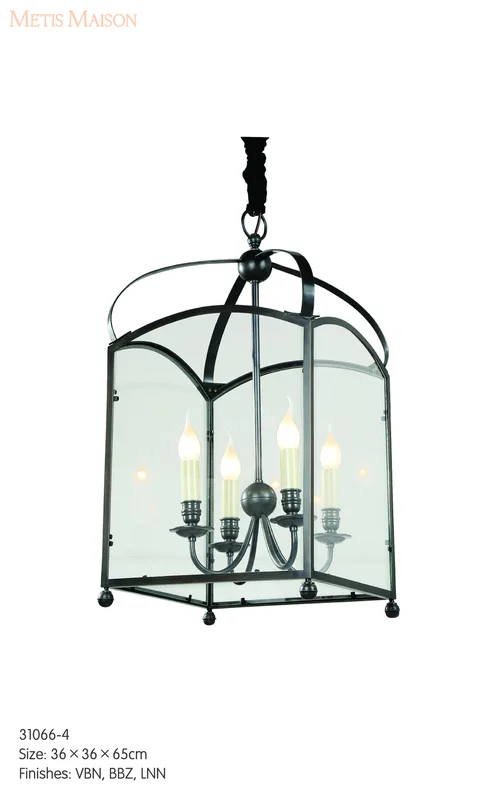
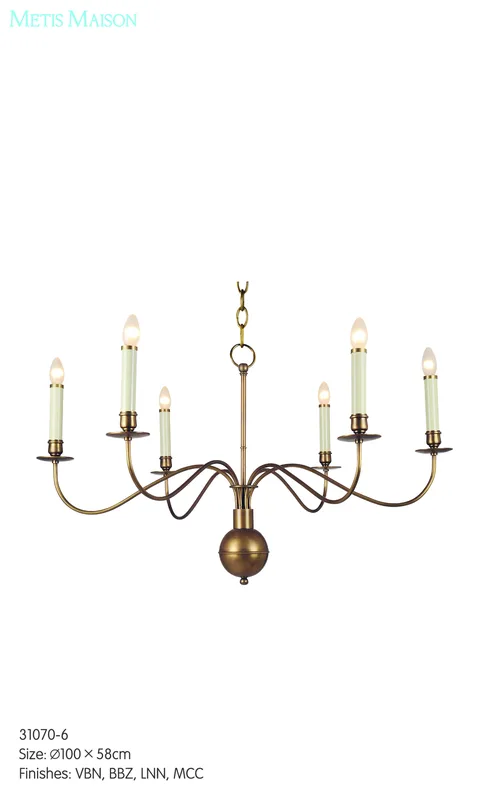
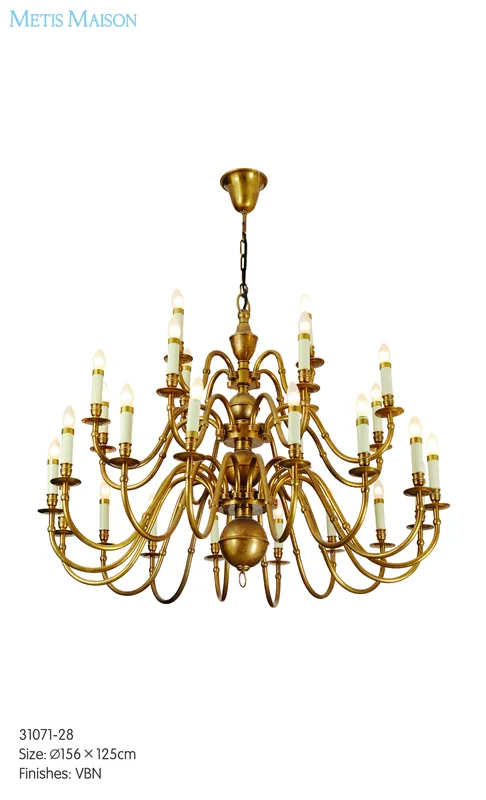
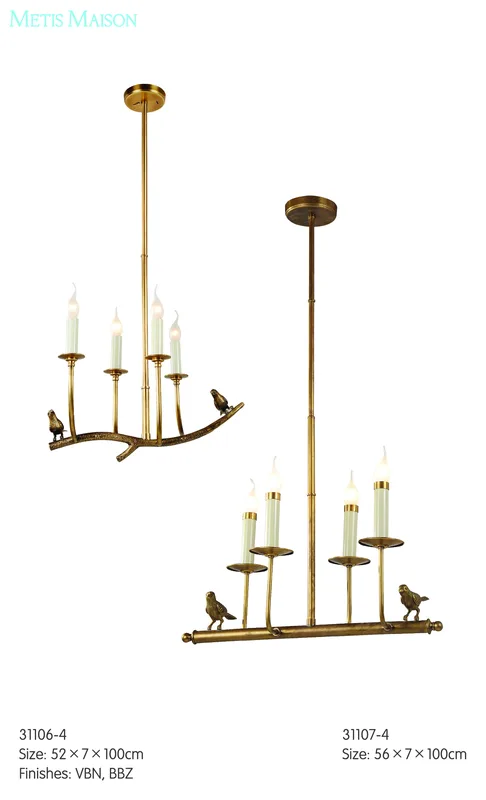
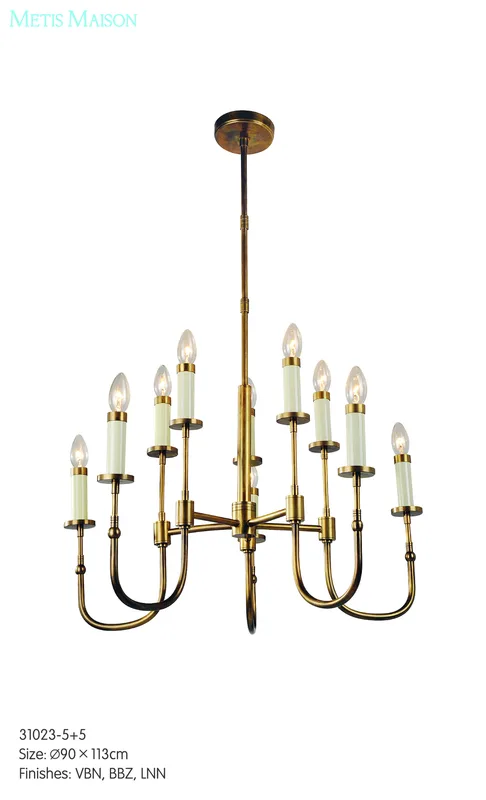
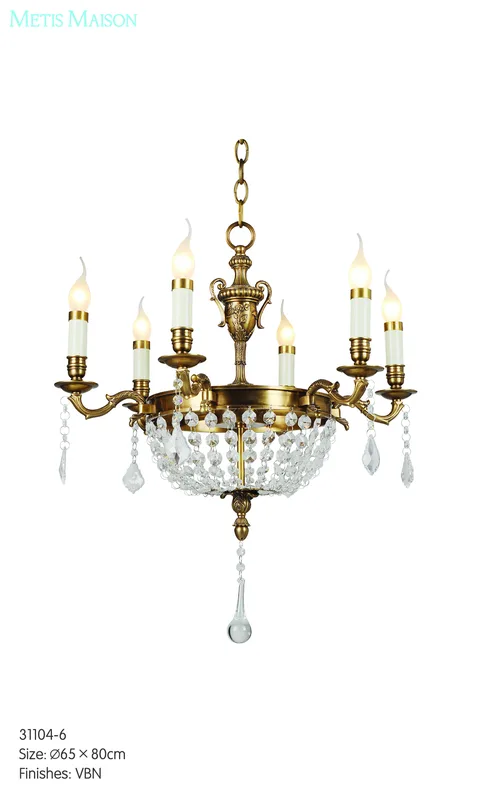
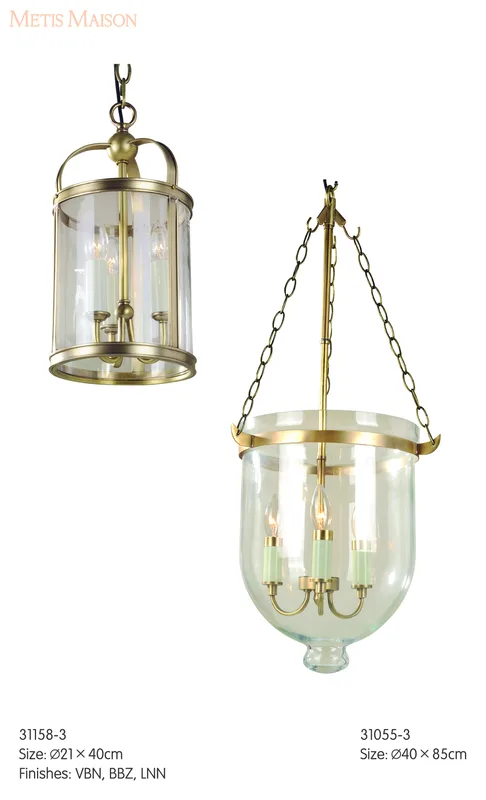
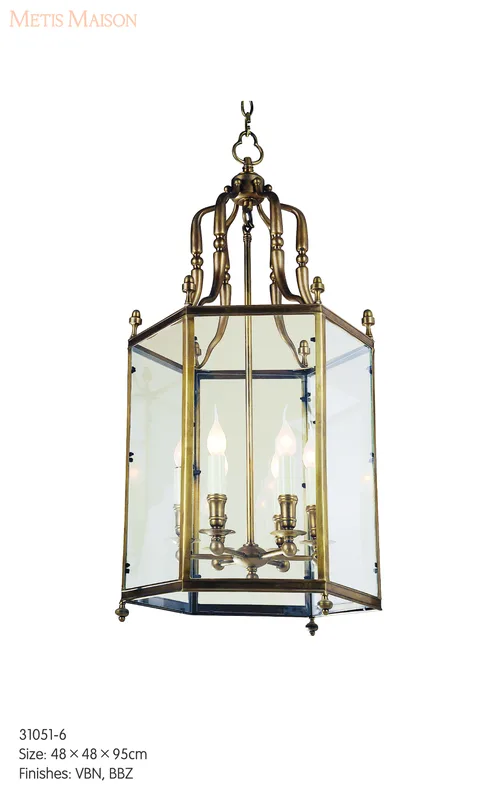
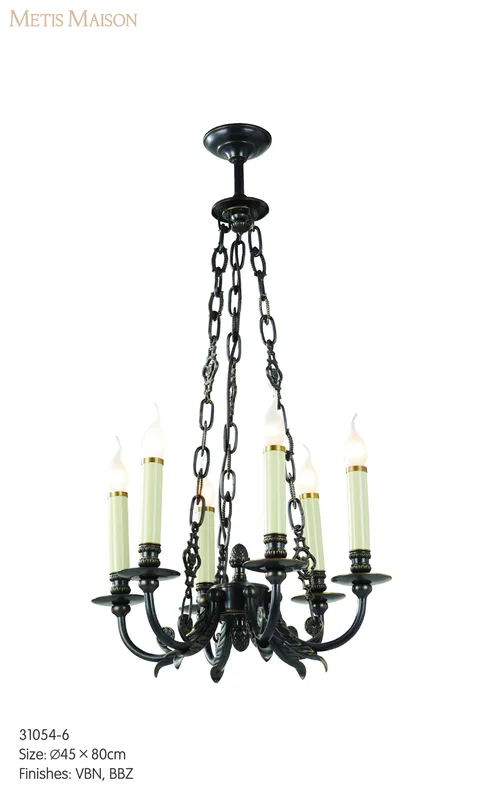
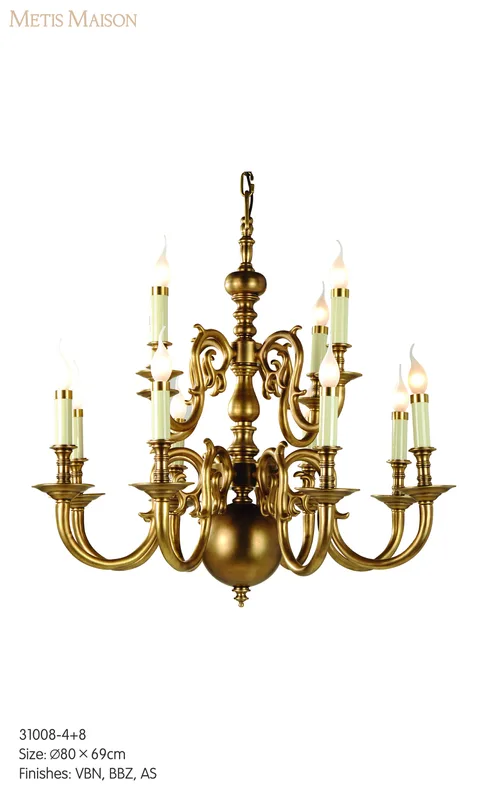
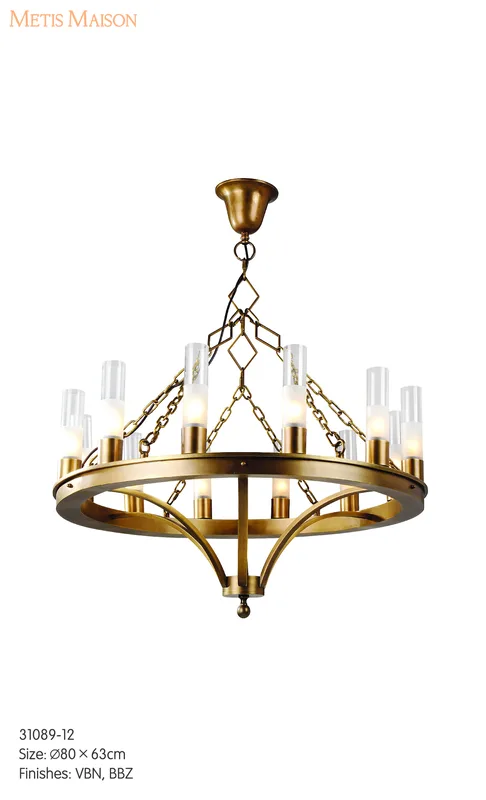
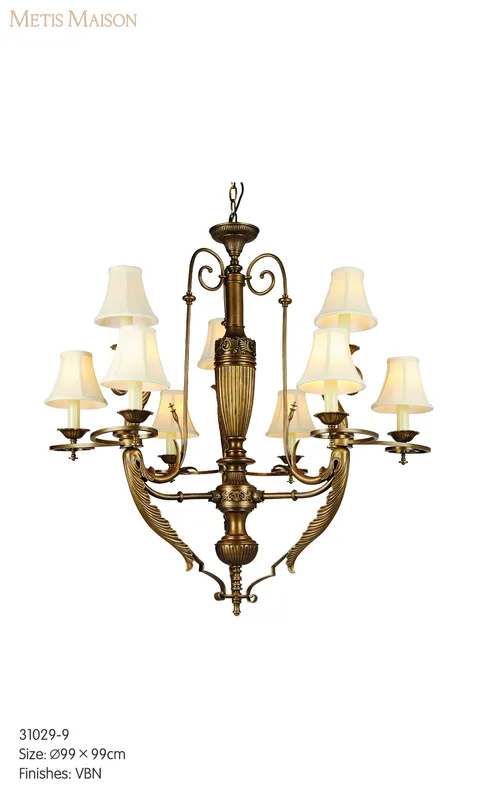
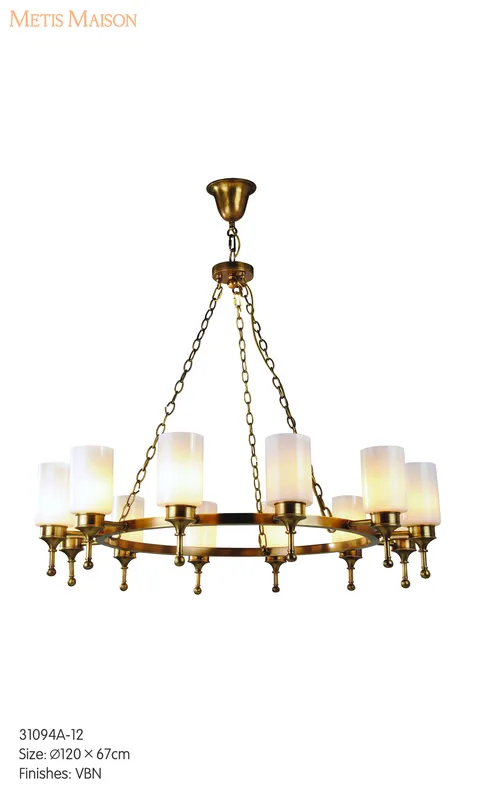
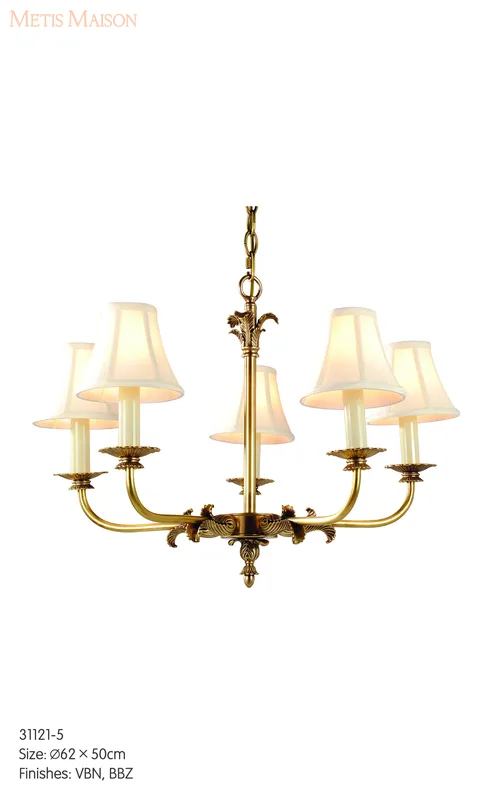
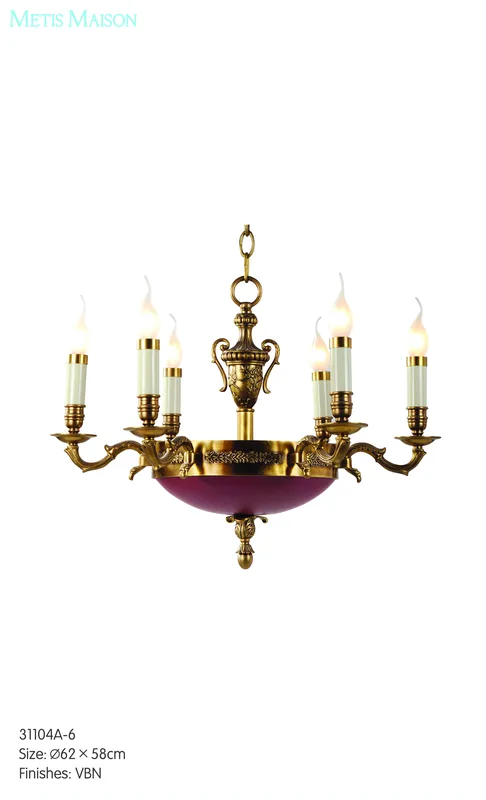
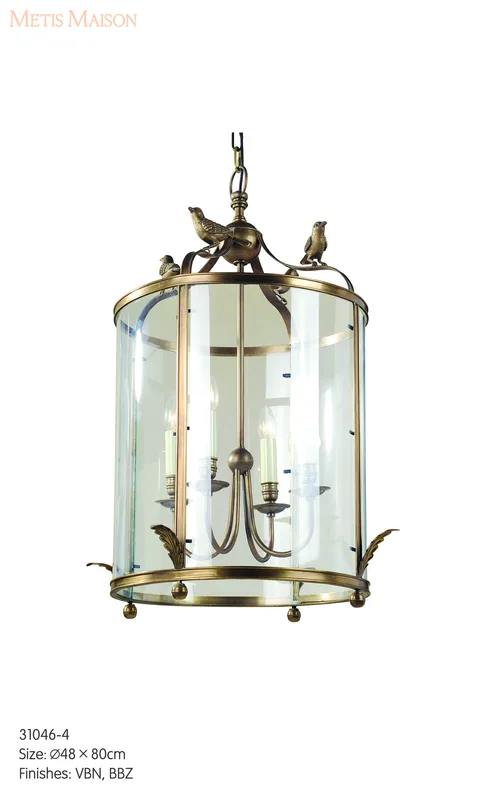
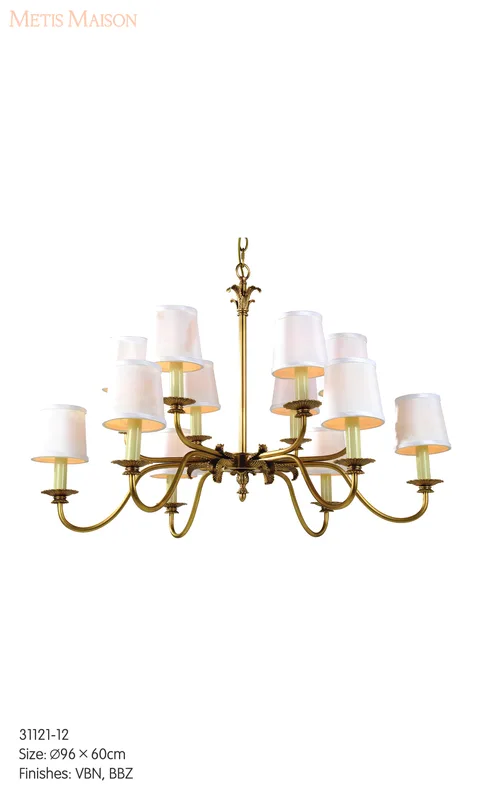
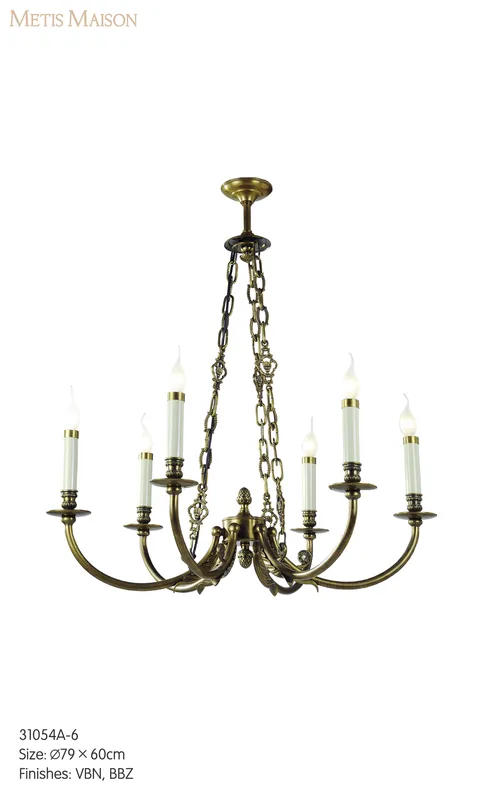
Brushed, Aged and Antique Brass — What Separates Them
"Brass chandelier" covers three quite different surfaces, and the difference lies in how the metal is treated after the body is welded, not in the alloy. Every chandelier body we make starts the same way: solid brass and copper tube stock, TIG-welded by hand, each seam ground flush — first on a belt grinder, then by hand with progressively finer abrasives — until the joint disappears under fingertip inspection. A body that will hold a finish evenly has to be a single continuous surface first — and none of that is visible in a photograph, which is why it is worth knowing how to tell solid brass from brass-plated before you specify a finish.
Brushed brass is mechanical. The body is ultrasonically cleaned and degreased, then abraded in one direction to lay down a fine, consistent grain before sealing. It reads warm and even, and it carries handling marks far better than a polished surface — which matters on a fixture that will be cleaned on a housekeeping schedule for decades.
An antique brass chandelier is chemical rather than mechanical. We produce it through our Custom Patina route, using the same sequence set out in our note on hand-rubbed bronze: liver of sulphur, ammonium chloride and custom blends applied wet-on-wet by brush and cloth, darkening the recesses first, then lifting colour back off the high points with a fine abrasive pad. The result is dimensional rather than uniform — deep in the valleys, warm on the ridges. Aged brass describes the same patination taken to a lighter, less contrasted stage.
Either way the surface is then hand-rubbed with steel wool and a light wax, and sealed with two coats of museum-grade microcrystalline wax, buffed and cured for 24 hours before electrical assembly. Lacquer gives a plastic gloss; the wax gives a softer sheen that deepens with age rather than flaking.
Because these are finishes and not catalogue variants, any of the 30 references on this page can be specified in brushed brass, an aged or antique brass patina, hand-rubbed bronze, smoked bronze, aged pewter, polished chrome or PVD. Ask for a 50 × 50 mm finish chip set before you specify — we ship them by DHL at cost, refundable against a confirmed order.
Sizing and Hanging a Brass Chandelier in a Double-Height Lobby
Two questions arrive with almost every hotel lobby chandelier enquiry: how wide should it be, and how far down should it hang. Where a lighting consultant is appointed we build to their drawing; the conventions below are what we work to when one is not.
For diameter, the long-standing rule is to add the room's length and width in metres and multiply by about 10 to get a diameter in centimetres — a 9 × 7 m lobby suggests something near 160 cm across. A room with a reception desk or an open stair already competing for attention usually wants a size smaller; a bare double-height void usually carries a large brass chandelier a size up.
Drop is governed by clearance first. Keep the bottom of the fixture at least 2.1 m above finished floor anywhere people walk, and 75–90 cm above a tabletop where it hangs over one. Above a 2.4 m ceiling, the usual convention adds roughly 7 cm of drop for each additional 30 cm of height.
A double-height space breaks that arithmetic, because the piece is read from two levels at once. Centring it in the void satisfies neither viewpoint — too low from the mezzanine, too high from the entrance. Setting the bottom roughly level with the mezzanine guard rail works more often: the fixture fills the upper two-thirds of the void and still reads as one object from the ground. It also means the design has to hold up seen from the side and from above, not only from underneath.
Suspension is a structural choice before it is a visual one. A rigid rod fixes the drop and will not swing, which is what a tall atrium with air movement needs; aircraft cable disappears over a long drop; chain stays adjustable on site. Canopies follow the ceiling — one canopy per drop, a multi-point canopy plate where an array shares a back box, a pitched canopy for a sloped soffit. Weight decides how much of this is negotiable: a brass crystal chandelier in K9 optical crystal (PbO ≥ 24%) is heavier per centimetre of diameter than an all-metal body the same size. Every fixture over 12 kg leaves here pre-hung on its actual suspension hardware, balanced and photographed for you; the FF&E package carries the suspension-point calculations and a recommended installation sequence. In seismic zones we engineer to IBC / ASCE 7.