The short version
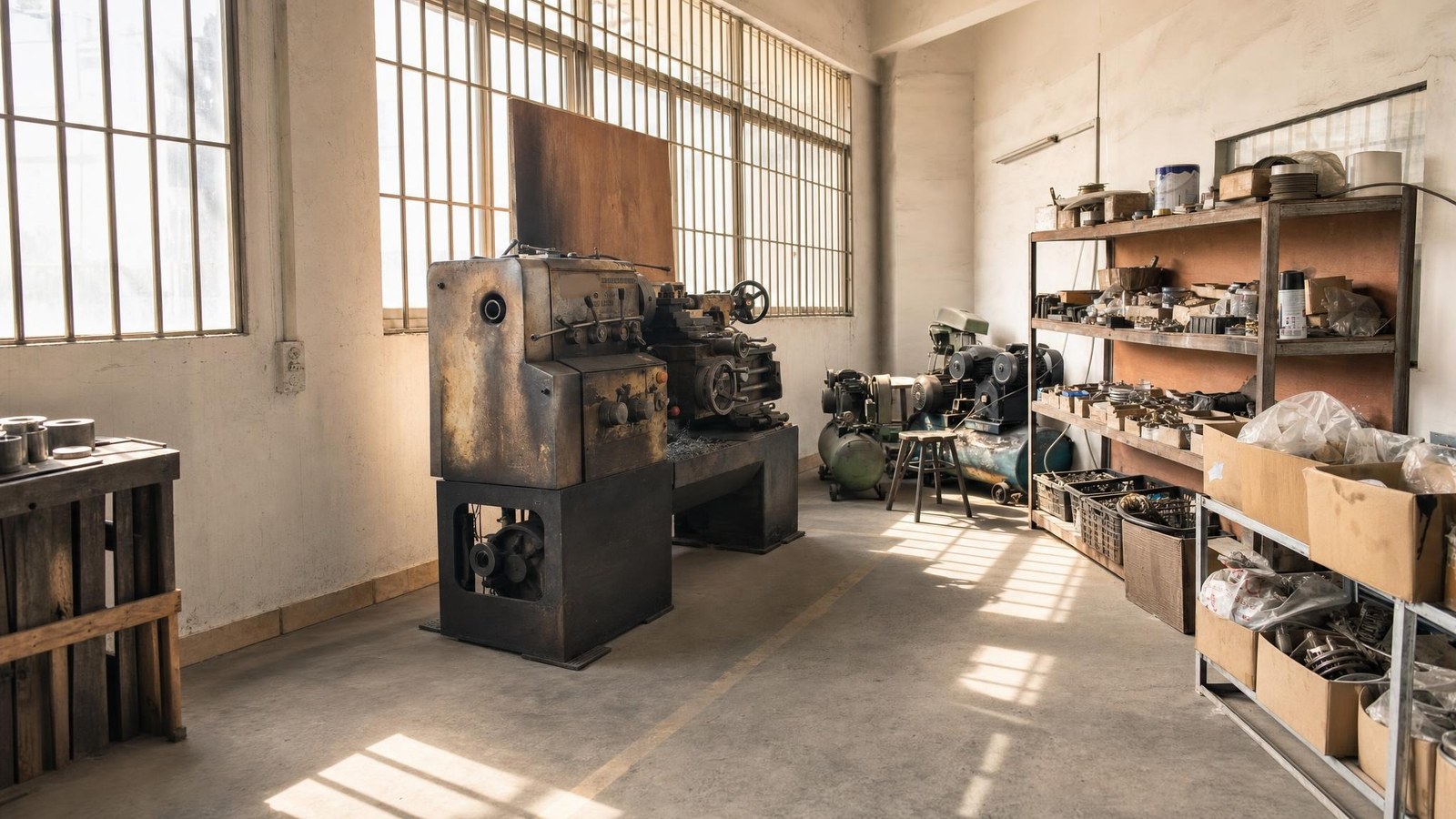
A hotel chandelier is four trades in one object: metalwork, crystal and glass, wood, and electrics. When those trades sit in different workshops, every hand-over is a chance for the finish, the fit or the wiring to drift. Metis Maison, a bespoke lighting maker in Guzhen, Zhongshan, describes a 3,800 square metre production set-up that covers all four and pre-hangs each large fixture before it ships. This article explains what each trade does, what to ask about it, and which documents prove it was done.
Why does "under one roof" matter for a hotel chandelier?
Guzhen in Zhongshan is often described as China's lighting capital, and much of the town works as a network: one workshop casts, another polishes, a third strings crystal, a fourth wires and assembles. That network is efficient for catalogue products. For a bespoke hotel fixture it creates a problem, because nobody owns the whole object. A finish approved on a brass sample can come back a shade different from a second polisher, and a crystal frame drilled to one drawing revision can meet an arm bent to another.
Keeping the trades together does not make a fixture good on its own. What it does is give one project manager authority over every stage, so a change to the drawing reaches the metal shop, the crystal bench and the electrical line at the same time. For a buyer, the practical question is not whether a supplier says it does everything in-house, but which stages it controls directly and how it shows you that.
The four trades inside a bespoke chandelier
Metis Maison lists four production areas: metal fabrication, crystal and glass work, wood finishing and electrical assembly. Processes shown on its site include sand casting, brass polishing, tube bending and CNC drilling. Each area has its own risks, and each has a check a buyer can ask for.
Metal fabrication
The metal frame carries the load and the look. Arms are bent from tube, decorative parts are cast, and joints are welded or mechanically fixed. The material matters as much as the shape: Metis Maison names stainless steel in SUS304 and SUS316 grades with 1.5 to 3 mm wall thickness, brass, bronze and aluminium. Finishes include hand-rubbed bronze, brushed brass, polished chrome, PVD, powder coat and custom patinas. The two questions worth asking are what the substrate is under each finish, and how the finish is matched across a phased order that may be produced months apart.
Crystal and glass
Crystal is where a chandelier's light is made, and where cheaper substitutes are hardest to see in a photograph. Metis Maison specifies K9 optical crystal, hand-cut, with a lead-oxide content of at least 24 percent, alongside K5 crystal, hand-blown glass and alabaster. Crystal parts are hung, strung or set into frames by hand, so the count, the cut and the fixing method should all appear on the drawing, not only in the sample.
Wood finishing
Wood appears in table lamp bases, frames and decorative elements, and it is the material most affected by humidity on the way to site. Metis Maison states that wooden luminaire parts and its hardwood crates carry FSC chain-of-custody certification. For a hotel, ask for the species, the moisture content at the time of finishing and the finish system, because a lacquer that looks right in Guangdong can behave differently in a dry, air-conditioned lobby.
Electrical assembly
The electrics decide whether the fixture can be installed and certified in your market. Metis Maison describes LED modules tuned between 2700K and 4000K, with CRI 80, 90 or 95 and above, and dimming by 0-10V, DALI, phase-cut, Casambi or Lutron wireless. Drivers and dimming modules are pre-wired in the factory to the project's control specification, tested and labelled. That last point saves days on site: the controls contractor connects to labelled, tested circuits instead of tracing wires inside a finished chandelier.
| Trade | What happens there | What to ask for |
|---|---|---|
| Metal fabrication | Tube bending, casting, welding, CNC drilling, polishing and finishing | Substrate under each finish, wall thickness, finish samples kept for later phases |
| Crystal and glass | Cutting, drilling, stringing and setting crystal; glass and alabaster parts | Crystal grade and lead-oxide content, piece count and fixing method on the drawing |
| Wood finishing | Bases, frames and decorative parts; finishing and lacquer | Species, moisture content, finish system, FSC claim where relevant |
| Electrical assembly | LED modules, drivers, dimming, internal wiring, labelling | Test report for the model and market, wiring diagram, control protocol confirmed |
How a project moves through the workshop
Metis Maison describes six stages, with one project manager assigned from the first to the last:
- Concept mood board: the designer's intent translated into a material palette, finish swatches and reference images, signed off before drawing starts.
- CAD and shop drawings: 3D SolidWorks models with every weld, fastener and load path dimensioned, and structural calculations attached.
- 1:1 prototype: a full-scale sample built and finished, with no tooling released before the client has seen the real piece.
- Sample sign-off by the designer and the owner, ideally on the largest fixture in the package.
- Production, with weekly photos to the client.
- Pre-hang test, crating and on-site installation support by the company's engineer.
The stage that most often gets compressed under deadline pressure is the prototype. It is also the one that prevents the most expensive mistakes, because finish, proportion and optics are judged on the real object rather than on a render.
The pre-hang test: the most useful day to visit
Metis Maison states that every chandelier over 12 kg is pre-hung in the factory with the actual suspension hardware, balanced, level-checked, load-tested and photographed, then knocked down for shipping with a reassembly drawing inside the crate. The company describes this as the single biggest risk-reduction step on an overseas hotel project.
If you can attend only one day in the factory, this is the one. A hung fixture shows things no drawing does: how the light falls from the crystal, whether the finish is even under the real lamps, whether the fixture hangs true, and how long it takes to assemble. Ask for the load-test report and the photographs to be filed with the project record.
What to look at on a pre-hang visit
Check the finish under the project's own colour temperature, not under workshop lighting. Look along the arms for level. Count the crystal against the drawing. Ask an engineer to show you the suspension point and the safety cable, and time a partial reassembly. Photograph the fixture next to the approved prototype.
Materials that belong in the specification
A showroom sample is built to look right. A hotel fixture has to stay right for decades. Metis Maison publishes the following material standards for its project work, and they are a useful template for any specification:
- Stainless steel: SUS304 or SUS316 marine grade, 1.5 to 3 mm wall thickness.
- Crystal: K9 optical crystal, hand-cut, lead-oxide content of at least 24 percent.
- Fasteners: ISO 898 grade 8.8 minimum, A4-80 stainless for coastal sites.
- Seismic: seismic-rated engineering to IBC / ASCE 7 where the site requires it.
- Plating: RoHS-compliant.
Writing these lines into the purchase specification, rather than leaving them in a brochure, makes them enforceable on every order and gives your site team something concrete to inspect against.
Where the paperwork comes from
Certification in Guzhen is often more layered than a logo strip suggests, and it is worth reading carefully. Metis Maison is open about its structure: most production certificates are held by its long-term audited manufacturing partner in the Pearl River Delta, operating since 2003, and apply to Metis Maison shipments. Listed are UL (E362995, under factory follow-up service), ETL (240200052TPE-001), CE-LVD and RoHS by model test, FSC (CN20/30679) and an amfori BSCI audit by SGS. As the exporter, Metis Maison issues a Certificate of Conformity and the commercial invoice for every project.
For your project file, the useful documents are the ones tied to your fixtures rather than to the company in general:
- Material certificates (mill sheets) for steel, brass and crystal.
- Weld procedure and welder qualification records.
- The pre-hang load test report and photographs.
- A site reassembly drawing and parts list inside each crate.
- Model-specific test reports (UL, ETL, CE-LVD, RoHS) against your destination market.
One honest caveat
No Guzhen maker does literally everything. Metis Maison states that polishing and final assembly happen in its own two facilities totalling 3,800 square metres in Zhongshan, and that a small share of metal casting comes from a long-term partner mill under its QC supervision. Ask any supplier the same question, which parts are made where, and expect a straight answer.
Order sizes and lead times
Metis Maison describes its work as bespoke from one piece, and states there is no fixed minimum for a single bespoke design, though a typical first order runs from 30 to 100 pieces per reference, with mixing allowed across references from the same material family and no minimum on repeat orders after sample sign-off. That suits both a boutique restaurant needing eight statement pendants and a tower hotel needing hundreds of sconces.
For lead time, the company gives 8 to 14 weeks end to end for most bespoke hospitality projects: one to two weeks for concept and shop drawings, two to three weeks for the prototype, four to six weeks of production, and two to three weeks for the pre-hang test and ocean freight. Plan the opening date backwards from the prototype sign-off, because that is the milestone that moves.
Packing for an overseas site
A chandelier that survives the factory can still fail in a container. Metis Maison describes its standard export packing as a triple-wall corrugated crate, a vacuum-formed foam cradle for the body, individual sleeves for glass and crystal parts, silica-gel desiccant, a humidity indicator card and an outer heat-treated wooden case compliant with ISPM-15, with container-loading photos and a packing list sent before the vessel sails. Inner foam is described as recyclable EPE or EVA rather than expanded polystyrene.
A checklist for buyers visiting a Guzhen workshop
- Which of the four trades happen on this site, and which are subcontracted? Ask to see each one.
- Is there one project manager from mood board to installation?
- Will a 1:1 prototype be made before tooling, and who signs it off?
- Will the largest fixtures be pre-hung with the real suspension hardware, and will I get the load-test report?
- Which documents name my fixtures: mill sheets, weld records, model test reports for my market?
- Who holds each certificate, and which entity issues the Certificate of Conformity?
- How are finishes kept consistent across phased deliveries?
- What is the packing specification, and will I see loading photos before the ship sails?
Frequently Asked Questions
Not literally everything, and the company says so. Polishing and final assembly are done in its own two facilities totalling 3,800 square metres in Zhongshan, and a small share of metal casting is sourced from a long-term partner mill under its QC supervision. Most production certificates are held by its audited manufacturing partner in the Pearl River Delta.
The fixture is fully assembled in the workshop and hung on its real suspension hardware, then balanced, level-checked, load-tested and photographed before being knocked down for shipping. Metis Maison does this for every chandelier over 12 kg and ships a reassembly drawing in the crate.
Metis Maison describes its work as bespoke from one piece and states there is no fixed minimum for a single bespoke design. A typical first order is 30 to 100 pieces per reference, and repeat orders after sample sign-off have no minimum.
The company gives 8 to 14 weeks end to end for most bespoke hospitality projects, from concept and shop drawings through prototype, production, pre-hang test and ocean freight. A fixed milestone schedule is confirmed in the quotation.